

Story
Crafting stories with purpose—where every creation inspires, empowers, and connects.

Thandie Newton and Nico Parker Had a Mother-Daughter Moment at Dumbo’s Premiere.
Wednesday, March 13, 2019
Thandie Newton regularly delights on the red carpet, but at last night’s premiere of Dumbo, she delivered a particularly special style moment. The Tim Burton film features the onscreen debut of Newton’s 14-year-old daughter, Nico Parker, and mother and child coordinated their looks to commemorate the occasion. Newton arrived at Los Angeles’ El Capitan Theater in a ruby fringed cocktail number from Oscar de la Renta and Parker sported a deep green Gucci minidress with an age-appropriate pink bow, in effect delivering dual perspectives on how to wear velvet.
Styled by Jason Bolden with Ippolita jewels and strappy sandals, Newton was flawless as always, but the night belonged to Parker, who made waves at her first major event as an actress. Her proud parents looked on as she stepped into the spotlight, and so Parker began her Hollywood career on a high note.
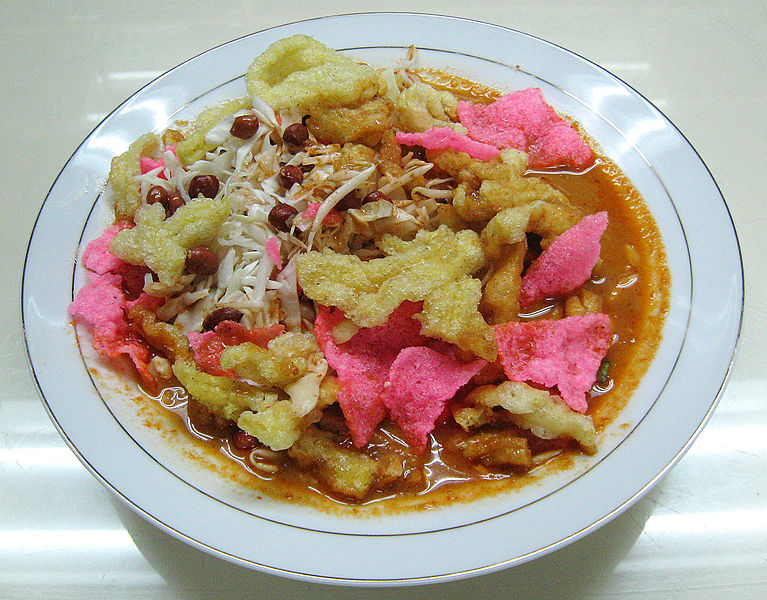
Wonderful Indonesia: What Is The Asinan?.
Monday, March 4, 2019
Asinan is a type of food that is made by means of vandalism, the ingredients which are referred to are various types of vegetables and fruits. Asinan is one of Indonesian culinary specialties. Requirements for the preservation process by soaking fruits or vegetables in a mixture of water and salt. Asinan is very similar to rujak, distinguishing between other ingredients rujak is served fresh, while the pickled ingredients are served in a marinated or pickled state. There are many types of pickles, but the most famous are Asinan Betawi and Asinan Bogor. Asinan can be found sold in restaurants, stalls, and mobile traders in Indonesia.

Tari Lenggang Nyai.
Monday, March 4, 2019
Tari Lenggang Nyai adalah salah satu kesenian tari masyarakat Betawi di Jakarta yang terinspirasi dari kisah hidup Nyai Dasimah. Tarian ini merupakan tarian kreasi baru yang di ambil dari sebuah cerita rakyat, sehingga banyak pesan dan makna yang di gambarkan melalui tarian ini.
Menurut sejarahnya, Tari Lenggang Nyai ini di ciptakan oleh seorang seniaman tari dari Yogyakarta bernama Wiwik Widiastuti. Karena kecintaannya pada kesenian tari di Indonesia dan kebudayaan Betawi membuat seniman ini menciptakan sebuah kreasi tarian baru berlatar belakang cerita rakyat Betawi yaitu cerita Nyai Dasimah. Nama Tari Lenggang Nyai sendiri berasal dari kata “lenggang” yang berarti “melengak – lengok” dan kata “nyai” yang di ambil dari cerita Nyai Dasimah.
Gerakan dalam Tari Lenggang Nyai ini menggambarkan karakter dan cerita dari Nyai Dasimah. Dalam pertunjukannya, penari menari dengan gerakan yang lincah yang menggambarkan keceriaan dan keluwesan gadis Betawi. Kelincahan tersebut terlihat dari gerak tubuh, kaki dan tangan para penari yang bergerak secara dinamis. Selain itu ada gerakan dari satu sisi ke sisi lain yang menggambarkan kebingungan Nyai Dasimah saat mengambil keputusan untuk memilih pendamping hidupnya.
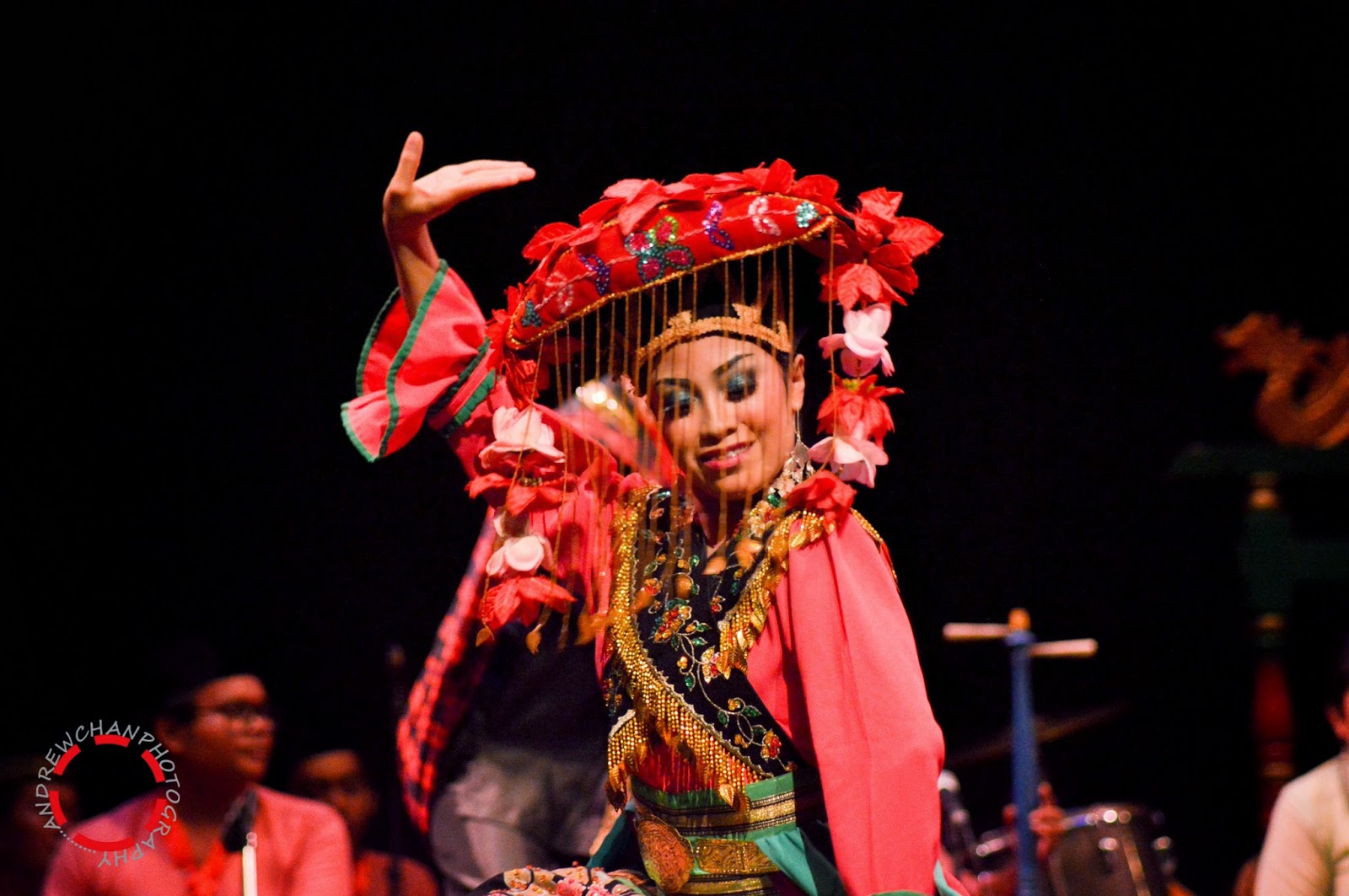
Wonderful Indonesia: What Is Cokek Dance.
Thursday, February 28, 2019
Tari cokek is a traditional originating from the culture of the Betawi people, DKI Jakarta. This dance comes from the acculturation of Chinese culture and Betawi culture in the past. The origin of this dance is thought to have started when there was a Chinese landlord named Tan Sio Kek who often held parties at his house. This party features Chinese-style music with instruments such as 2 sawai trigon which are combined with traditional Betawi musical instruments, such as flutes, gongs and drums. The guests who came along danced to the rhythm of the tetabuan that was played, so that gradually this dance was created called Cokek.
The name of Cokek's own dance is thought to originate from the last name used in the dance. However, there are also those who argue that the name comes from the name of the landlord. And until now the Cokek dance still exists especially in the culture of the Betawi community.
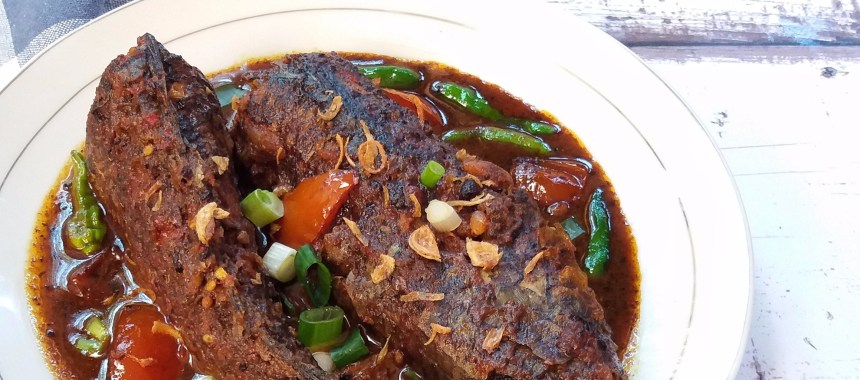
Wonderful Indonesia: What Is Gabus Pucung.
Thursday, February 28, 2019
Gabus pucung adalah masakan khas Betawi yang diolah dari bahan baku ikan gabus dengan kuah warna hitam. Gabus pucung adalah gabungan nama dari kata "gabus" dan "pucung". Gabus (Ikan Gabus) adalah isi dari sayur tersebut, dan pucung atau kluwek adalah pewarna sayur tersebut. Cara pembuatan masakan ini mirip dengan sayur ikan biasa dengan tambahan pucung untuk pewarna sayur.
Di era penjajahan Belanda, jenis ikan seperti ikan mas dan mujaer terbilang mahal. Untuk menyiasatinya, warga Betawi memilih untuk menggunakan ikan gabus yang bebas mereka dapatkan karena berkembang secara liar di tempat-tempat tersebut.
Gabus pucung sendiri masuk dalam salah satu tradisi budaya Betawi yang berkembang di zamannya. Tradisi itu biasa disebut nyorog atau mengantarkan makanan yang dimasak oleh anak untuk diberikan kepada orangtua atau oleh menantu kepada mertua. Tradisi ini biasa dilakukan menjelang puasa atau Lebaran sebagai pengikat tali silaturahmi.
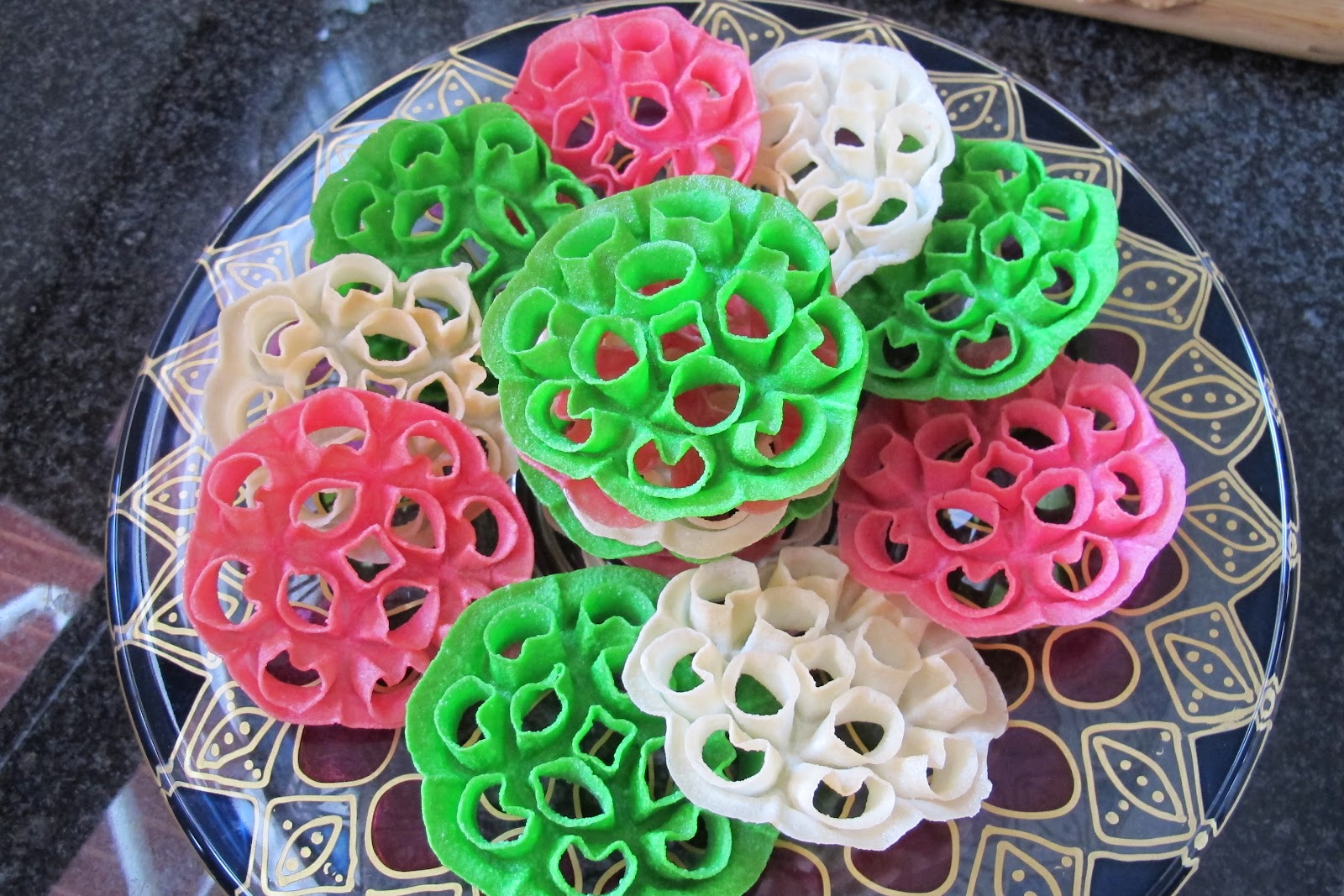
Wonderful Indonesia: What Is Kembang Goyang?
Wednesday, February 27, 2019
Kembang Goyang is traditional snack from Indonesia (Betawi). If its translated into English, the word 'Kembang Goyang' means a shaking flower. Kembang Goyang is made of rice flour which is mixed with eggs, sugar, a pinch of salt, and coconut milk. The dough can be fried after heating the oil and the Kembang Goyang mold. After the oil and Kembang Goyang mold get hot, the mold can be put into the dough and then put into the hot oil again while shaking a mold until the dough get unattached.
Wonderful Indonesia: what is Tari Belenggo?
Wednesday, February 27, 2019
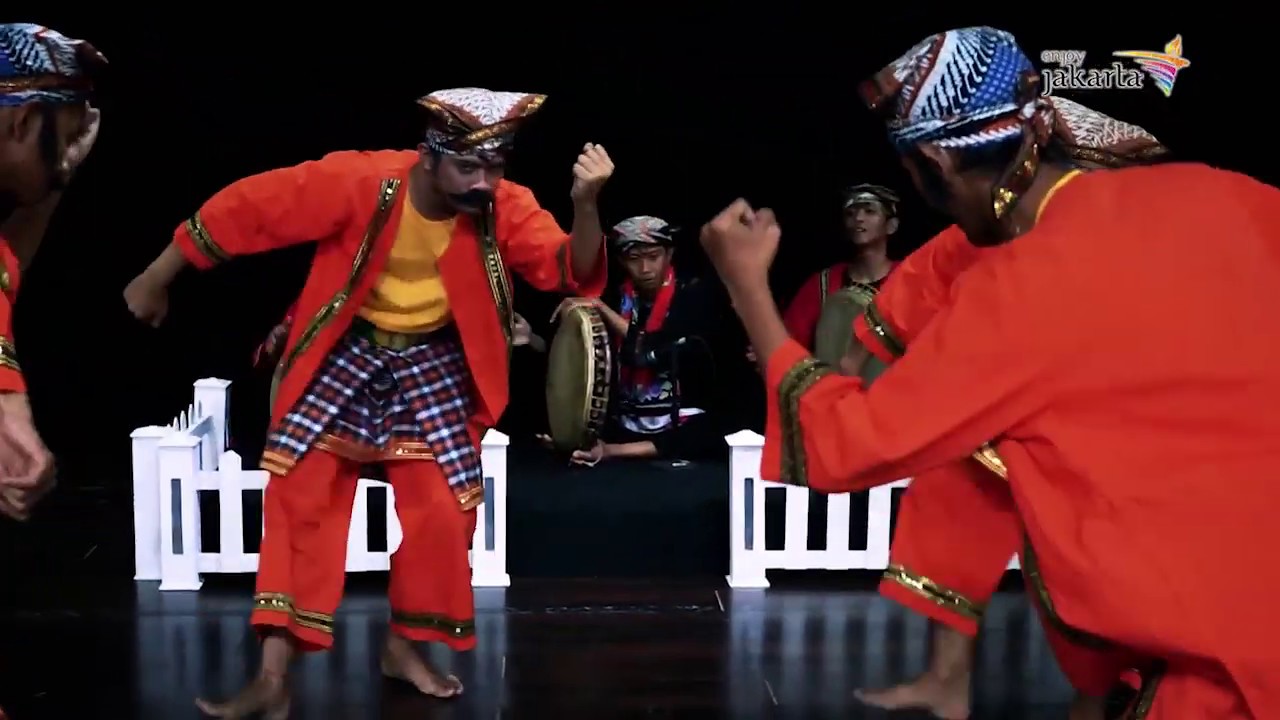
Kata Belenggo mungkin sama artinya dengan tari. Sebab ada ungkapan "diblenggoin" yang artinya diiringi dengan tarian. Ada pula yang menyebut Blenggo berasal dari kata "lenggak-lenggok", gerakan yang lazim dalam suatu tarian.
Terlepas dari segi etimologis itu, Tari Belenggo tidak memiliki pola yang tepat. Umumnya gerak tari diambil dari gerak-gerak pencak silat. Jadi sangat tergantung pada perbendaharaan gerakan pencak silat penari yang bersangkutan. Sehingga seorang penari blenggo yang menguasai silat Cimande dengan geraka-gerakan pendek akan berbeda dengan yang menguasai silat Cikalong yang gerakannya panjang. Tetapi ada juga keyakinan bahwa gerak-gerak pencak atau gerak lincah tidak selalu berasal dari gerak pencak silat, sehingga seorang penari belenggo tidak harus bisa pencak silat.
Berdasarkan musik pengiringnya, Tari Blenggo dibagi menjadi dua: Belenggo Rebana dan Belenggo Ajeng. Blenggo Rebana diiringi oleh rebana biang dan Belenggo Ajeng diiringi oleh gamelan ajeng.
Wonderful Indonesia: what is Lenong?.
Wednesday, February 20, 2019
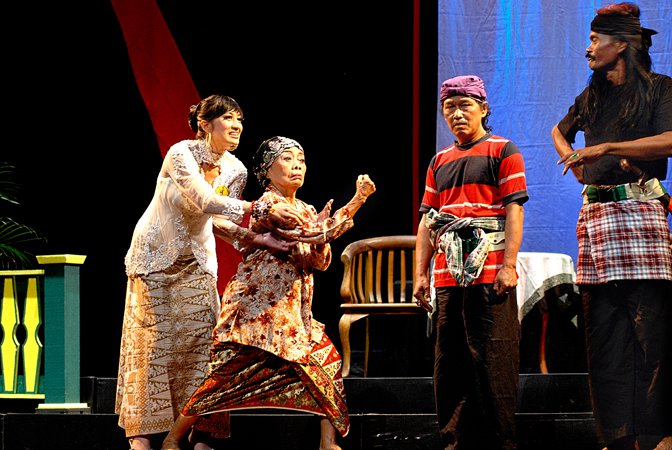
Lenong is a form of theater traditional to the Betawi people of Jakaera, Indonesia. Dialogue is generally in the Betawi dialect. Actions and dialogue are often presented in a humorous manner on top of a stage known as a pentas tapal kuda, so named for the way actors enter the stage from the left and right. Audiences sit in front of the stage. The number of performers is determined by the needs of the story. Male performers are referred to as panjak, while female performers are known as ronggeng. Performers are generally poorly educated.
A performance is generally opened with a prayer, known as ungkup, and a ritual offering. The performers are then introduced. Gambang Kromong is one of the musical genres which may accompany a performance. Musicians may use various instruments, including flutes, gongs, accordions, or drums. The songs are traditionally quite formulaic, and several songs are common in performances, including "Cente Manis" and "Jali-Jali". Chinese musical influences can be seen.
Performances can be classified under many genres, although most are about heroes or criminals; tales adapted from folklore, such as from the One Thousand and One Nights, are also common. In broad strokes there are two main subdivisions of lenong, namely lenong denes and lenong preman. Stories in lenong denes focus on the exploits of the nobility, the rich, and the powerful. Lenong preman stories are always about commoners or folk heroes. The type of performance will affect the costumes worn. Stories are not memorised from a script. Rather, performers will memorise an orally-presented outline and follow that, with improvisation as necessary.
